
Best platforms to sell digital products: Top 12 options 2025

The creator economy is booming, and digital products - from ebooks and courses to AI prompts and software - are at its core. But turning your creation into revenue requires more than just a great idea; it demands the right platform. The best platforms to sell digital products don't just process payments. They handle secure file delivery, manage complex sales tax compliance, offer integrated marketing tools, and fit seamlessly into your existing workflow, letting you focus on creating.
Choosing the wrong one can mean wrestling with clunky user interfaces, paying excessive fees, or missing out on crucial features that could scale your business. This guide moves beyond surface-level feature lists to provide a practical, in-depth analysis of the top 12 platforms available today. For those seeking a broader understanding of the foundational systems that power online sales, exploring various e-commerce CMS platforms can provide valuable context.
Our goal is to help you make a strategic choice that aligns perfectly with your specific products, target audience, and long-term business goals. We'll explore the specific strengths, hidden limitations, and the exact scenarios where each one shines. Whether you're selling a single PDF, a complex software-as-a-service (SaaS) product, or a library of AI prompts, this resource will help you find the ideal launchpad. Each platform review includes screenshots and direct links, so you can see them in action and get started immediately.
1. PromptDen
PromptDen establishes itself as a premier, community-driven hub specifically engineered for the burgeoning AI prompt economy. More than just a simple library, it functions as an integrated ecosystem for discovering, building, and monetizing AI prompts across a diverse range of models. This platform is an exceptional choice for creators looking to sell highly specialized digital products that power today's generative AI tools. It effectively bridges the gap between prompt engineering as a skill and a profitable venture, making it one of the best platforms to sell digital products in the AI niche.

Key Strengths and Use Cases
PromptDen’s strategic advantage lies in its multi-modal support and direct workflow integrations. Creators aren't limited to a single AI model; they can sell prompts for text generators like ChatGPT, Gemini, and Claude, as well as for image models such as Midjourney, Stable Diffusion, and DALL·E. This cross-model coverage significantly broadens the potential market for a seller's digital assets.
A standout feature is the suite of browser extensions that inject prompts directly into the native interfaces of ChatGPT, Gemini, and Claude. This provides a tangible benefit for buyers, allowing them to test and iterate on purchased prompts instantly, which in turn enhances the perceived value of the products you sell. For sellers, this creates a stickier ecosystem where high-quality, actionable prompts are in constant demand.
Monetization and Platform Details
The platform provides robust tools for monetization, allowing creators to sell individual prompts, license bundles, or even offer prompt-adjacent assets. The built-in discovery engine, which highlights trending prompts with visible engagement metrics (some reaching over 200,000 interactions), offers a clear pathway for high-performing creators to gain visibility and drive sales without an existing audience.
- Ideal Use Cases: Perfect for prompt engineers monetizing their expertise, marketers selling optimized copy recipes, designers licensing artistic styles, and developers offering automated workflow prompts.
- Pricing and Fees: Marketplace costs and seller terms are typically viewed within listings or after creating an account, as item pricing is set by individual creators. This model gives sellers control but requires buyers to explore the marketplace to understand the price landscape.
For those new to this space, PromptDen offers valuable resources, including an active blog and a Help & Knowledge Base. You can learn more about its AI prompt marketplace to better understand the opportunity.
Visit the website: https://promptden.com
2. Gumroad
Gumroad positions itself as one of the best platforms to sell digital products for creators prioritizing speed and simplicity over complex customization. Its streamlined interface allows you to create a product, set a price, and start selling in minutes, making it ideal for those who want to validate an idea quickly. The platform supports a wide array of digital goods, from ebooks and design assets to software licenses and online courses.
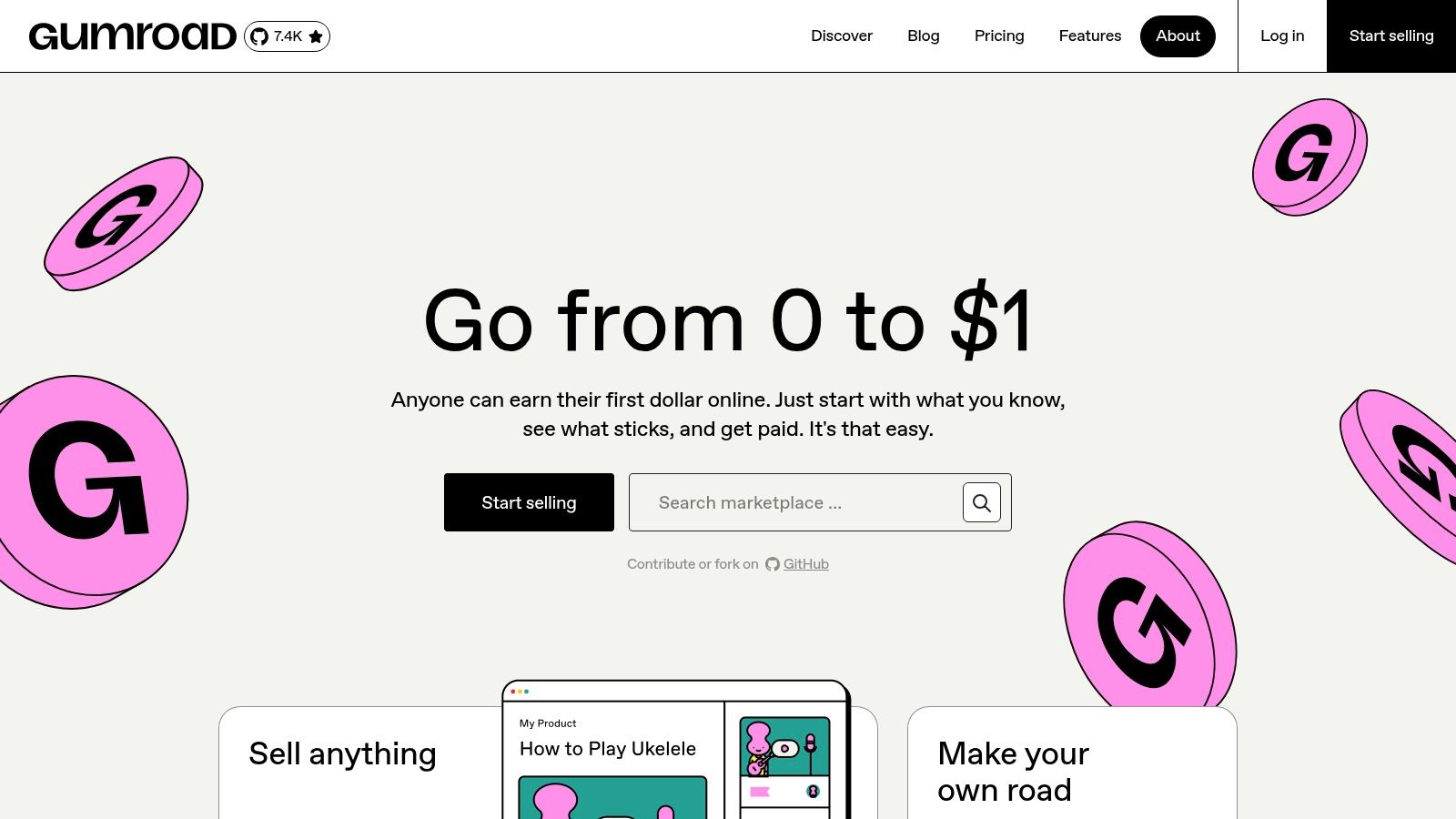
A significant advantage is Gumroad’s role as Merchant of Record (MoR) since early 2025. This means it handles the complexities of calculating, collecting, and remitting global sales taxes on your behalf, a major compliance burden lifted from individual sellers. Its "pay-what-you-want" pricing feature is another standout, empowering creators to let their audience set the price, which can increase conversions and build community goodwill.
Key Details & Pricing
Gumroad's pricing is a straightforward flat fee model with no monthly subscription cost, making it completely free to start.
- Platform Fee: 10% on every sale.
- Gumroad Discover: An additional 10% fee is applied to sales originating from their optional marketplace, but this can be a valuable source of new customers.
- Best For: Solo creators, artists, and writers who need a no-fuss, all-in-one solution without upfront costs.
Pros:
- Acts as Merchant of Record, handling global sales tax.
- Extremely fast setup process; no monthly fees.
- Simple, clean user interface for both sellers and buyers.
Cons:
- The flat 10% fee can become more expensive than subscription models for high-volume sellers.
- Limited storefront customization compared to competitors.
Website: https://gumroad.com
3. Payhip
Payhip establishes itself as a powerful all-in-one e-commerce solution, making it one of the best platforms to sell digital products for creators who also offer courses, memberships, or even physical goods. It provides a simple yet comprehensive storefront that supports everything from ebooks and software to coaching services, all from a single dashboard. This versatility allows creators to scale their offerings without needing to migrate to a new platform as their business model evolves.
One of Payhip's most compelling features is its handling of EU and UK VAT. The platform automatically collects and remits these taxes on behalf of the seller, removing a significant compliance headache for anyone selling to European customers. Combined with instant payouts directly to your PayPal or Stripe account and a generous 5 GB per-file size limit, Payhip is designed for both convenience and scalability.
Key Details & Pricing
Payhip offers a transparent tiered pricing model where all features are available on every plan, including the free one. You only pay more to reduce transaction fees as your sales grow.
- Free Plan: 5% transaction fee.
- Plus Plan: $29/month with a 2% transaction fee.
- Pro Plan: $99/month with a 0% transaction fee.
- Best For: Creators who want an affordable, all-in-one platform with robust tax handling and the potential to scale into courses and memberships.
Pros:
- Handles EU/UK VAT compliance automatically.
- No feature restrictions on any plan, including the free tier.
- Offers instant payouts and supports a wide range of product types.
Cons:
- Transaction fees on lower-tier plans can add up for high-volume sellers.
- Relies on external payment processors (Stripe/PayPal), which have their own separate fees.
Website: https://payhip.com
4. Sellfy
Sellfy is a versatile e-commerce platform that excels for creators looking for a simple, yet powerful, hosted storefront. While many platforms focus solely on digital downloads, Sellfy integrates print-on-demand, subscriptions, and even physical goods into one unified dashboard. This makes it one of the best platforms to sell digital products for creators who plan to diversify their product offerings without needing multiple services.
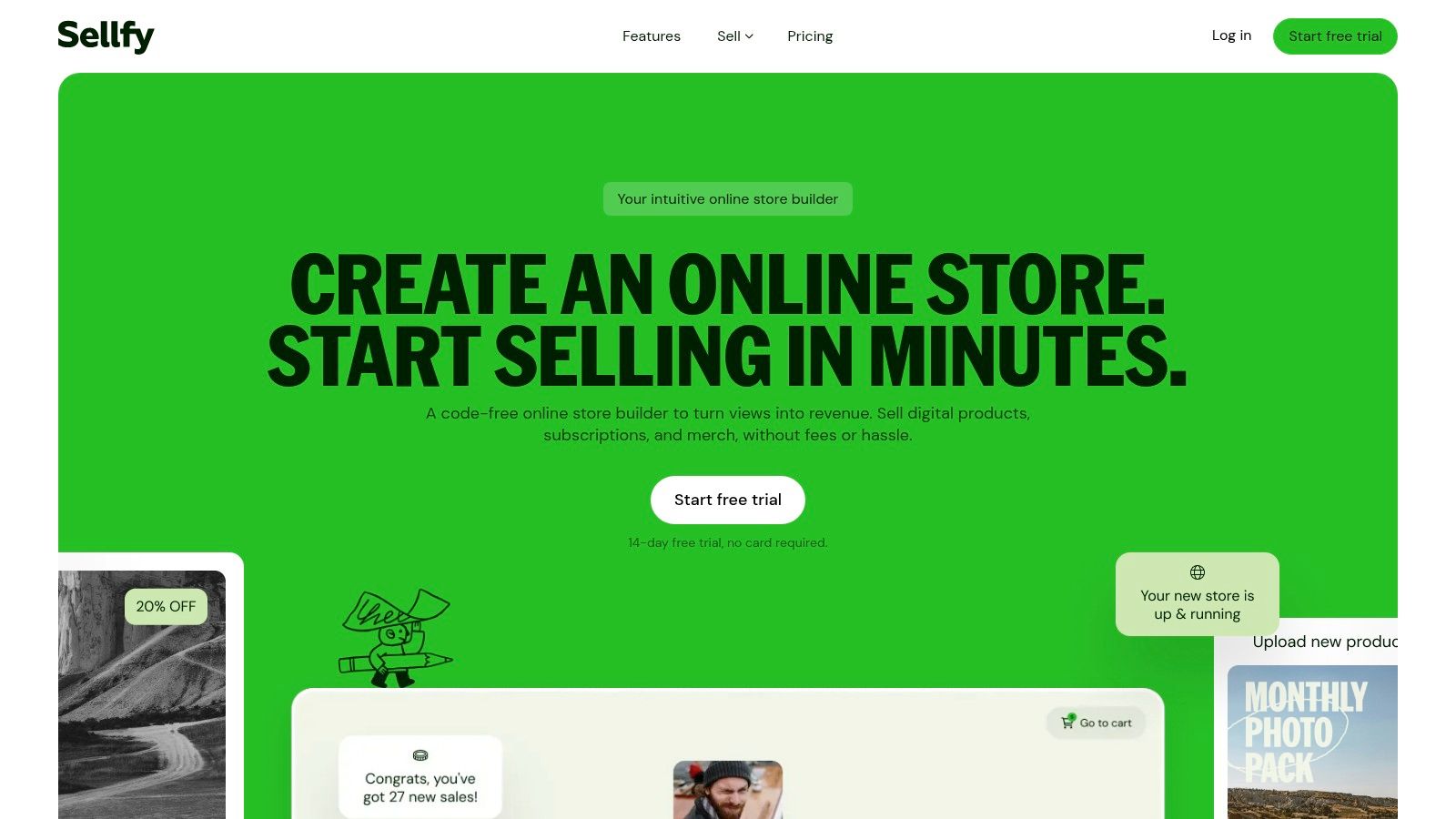
A key differentiator is its approach to fees. Unlike platforms that take a percentage of every sale, Sellfy's paid plans feature a 0% platform transaction fee, which is highly appealing for sellers with consistent volume. It also offers built-in marketing tools like email marketing, discount codes, and upsells directly within the platform, reducing the need for third-party integrations. Support for large file sizes (up to 20 GB depending on the plan) is another practical benefit for sellers of video courses, high-resolution assets, or extensive software packages.
Key Details & Pricing
Sellfy uses a tiered subscription model, with features and revenue limits scaling with each plan. All paid plans remove Sellfy's transaction fees.
- Starter Plan: Starts at 29/month for up to 10k in annual sales.
- Business Plan: $79/month, adding features like product upsells and cart abandonment emails.
- Best For: Creators who want an all-in-one solution for digital, physical, and print-on-demand products with predictable monthly costs and built-in marketing tools.
Pros:
- 0% platform transaction fees on all paid plans.
- Integrated support for digital, physical, subscription, and print-on-demand products.
- Includes built-in marketing features like email and upsells.
Cons:
- The free plan is limited, and you must upgrade to a paid plan to start selling.
- Standard payment processor fees from Stripe/PayPal still apply.
Website: https://sellfy.com
5. Podia
Podia stands out as one of the best platforms to sell digital products by consolidating multiple tools into a single, cohesive ecosystem. It’s an all-in-one solution designed for creators who want to sell online courses, digital downloads, coaching, webinars, and memberships without juggling different software for email marketing, landing pages, and affiliate management. This integrated approach simplifies the tech stack, allowing you to build and manage your entire digital business from one dashboard.
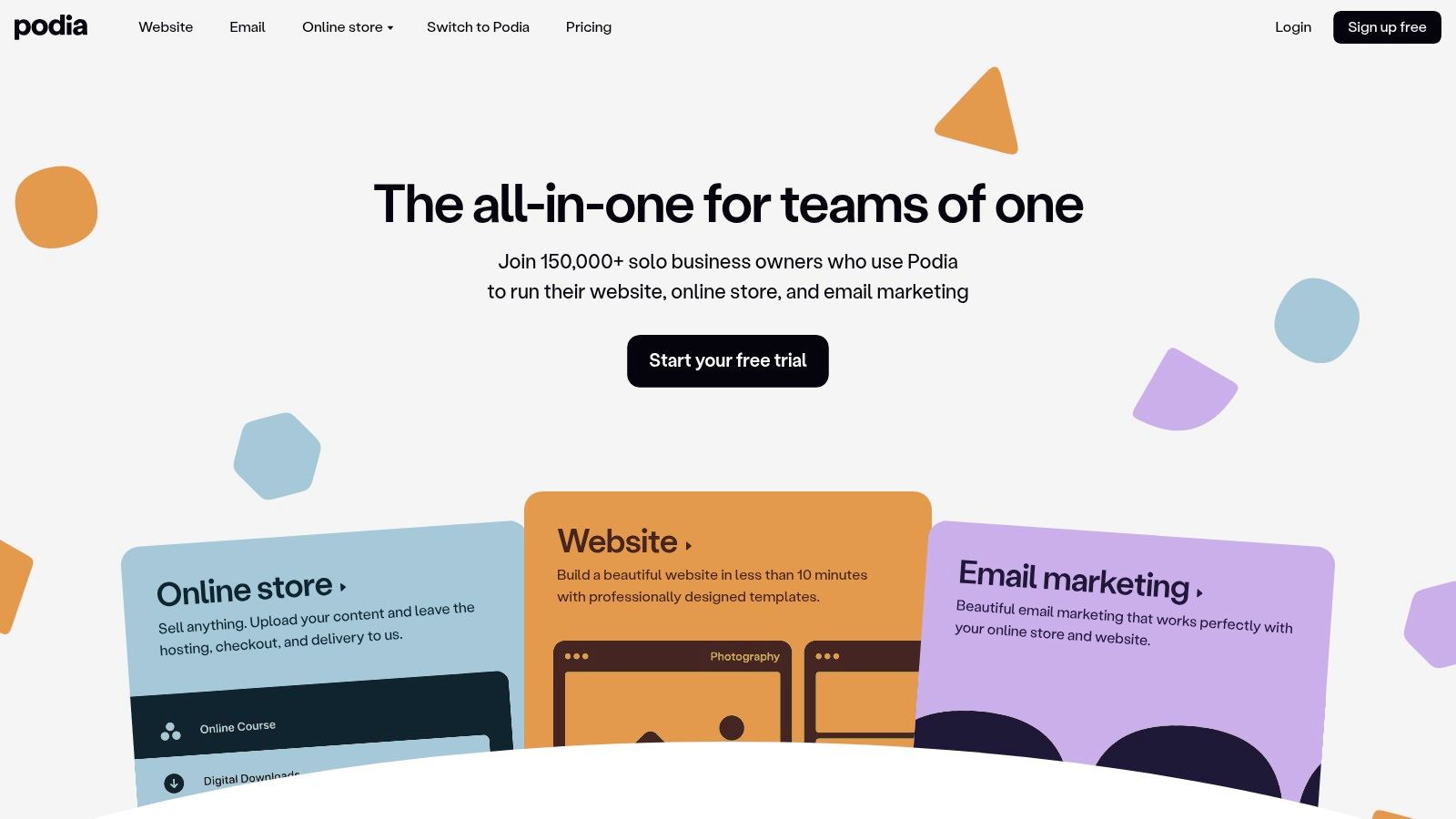
A key advantage is its focus on creator experience, offering free migrations of products and customers for those on paid plans. This makes switching to Podia a nearly frictionless process. The platform bundles a website builder, integrated checkout, and affiliate marketing tools, replacing the need for separate subscriptions to services like Mailchimp or a dedicated landing page builder. This makes it an excellent choice for creators looking to streamline their operations and reduce monthly overhead.
Key Details & Pricing
Podia offers a free plan with an 8% transaction fee and several paid subscription tiers, each adding more advanced features and lower transaction costs.
- Mover Plan: $39/month with a 5% transaction fee.
- Shaker Plan: $89/month with 0% transaction fees.
- Best For: Course creators and coaches who want an integrated platform that includes a website, email marketing, and product hosting in one predictable monthly subscription.
Pros:
- All-in-one platform combines a site builder, email marketing, and digital product sales.
- User-friendly interface makes it fast to launch and manage products.
- Offers free migrations for products and customers on paid plans.
Cons:
- The 5% transaction fee on the entry-level Mover plan can be a drawback.
- Lacks the advanced automation and customization of more specialized enterprise platforms.
Website: https://www.podia.com
6. Kajabi
Kajabi positions itself as a premium, all-in-one knowledge commerce suite, making it one of the best platforms to sell digital products for established creators and businesses. It goes beyond simple product sales, integrating sophisticated tools for online courses, coaching programs, memberships, communities, and marketing funnels. The platform is designed for users who want to build a polished, cohesive brand experience without stitching together multiple third-party apps.
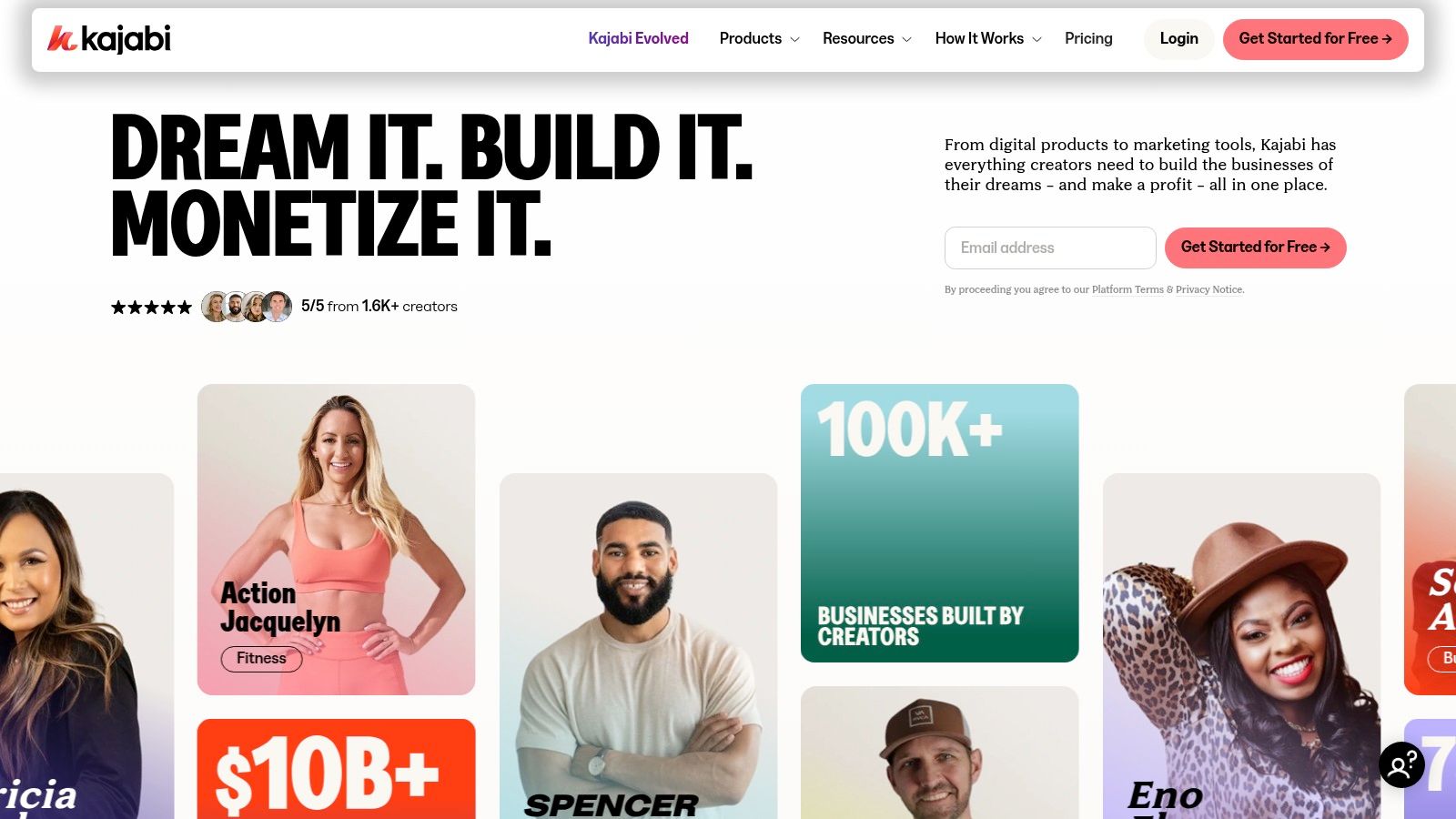
Its core strength lies in its integrated ecosystem. You can build landing pages, run email marketing campaigns, manage customer relationships, and host your entire product catalog from a single dashboard. Kajabi also provides robust templates and automation features, allowing you to create professional-looking experiences that guide customers seamlessly from discovery to purchase. While its higher price point reflects its comprehensive nature, the platform's power justifies the cost for serious entrepreneurs ready to scale.
Key Details & Pricing
Kajabi operates on a subscription-based model with several tiers, reflecting its focus on providing a complete business infrastructure.
- Platform Fee: Starts at 149/month (or 119/month billed annually) for the Basic plan, with higher tiers offering more products, funnels, and contacts.
- Transaction Fees: 0% on all plans, though standard payment processor fees from Stripe/PayPal still apply. Native Kajabi Payments offers discounted processing rates in certain regions.
- Best For: Established course creators, coaches, and infopreneurs who need a powerful, integrated solution and are willing to invest in a premium platform.
Pros:
- Robust all-in-one builder that scales for established brands.
- Includes high-quality templates and automations to create polished experiences.
- 0% platform transaction fees on all plans.
Cons:
- Significantly higher monthly cost than most creator-focused platforms.
- Announced plan and pricing updates for 2025–2026 require attention for long-term budgeting.
Website: https://kajabi.com
7. Shopify
Shopify is a powerhouse in e-commerce, offering a comprehensive solution that extends far beyond simple product listings. While it's renowned for physical goods, it is also one of the best platforms to sell digital products for those who want a full-fledged online store. By integrating one of several digital delivery apps from its extensive marketplace, sellers can offer everything from ebooks and software to music and digital art with enterprise-grade reliability. This approach is ideal for businesses that plan to scale or sell a mix of physical and digital items.

The key differentiator for Shopify is its vast ecosystem. Sellers gain access to thousands of themes and apps, powerful analytics, and robust marketing tools. This allows for unparalleled customization of the storefront and customer journey. Shopify also acts as its own payment processor through Shopify Payments and provides advanced tools for international sales, handling complexities like currency conversion and local payment methods. This makes it a complete commerce operating system rather than just a simple sales page builder.
Key Details & Pricing
Shopify's pricing involves a monthly subscription, payment processing fees, and potential costs for the third-party apps needed to handle digital downloads.
- Platform Fee: Starts at $29/month for the "Basic" plan.
- Transaction Fees: Vary by plan, but typically around 2.9% + 30¢ for online sales if using Shopify Payments.
- Digital Delivery App: Costs for apps like SendOwl or Digital Downloads vary from free to monthly subscriptions.
- Best For: Serious entrepreneurs and established businesses needing a scalable, highly customizable storefront for a mix of products.
Pros:
- Enterprise-grade reliability and extensive integration capabilities.
- Full control over branding with countless themes and apps.
- Handles both digital and physical products seamlessly in one store.
Cons:
- Higher overall cost due to monthly fees, transaction fees, and app subscriptions.
- More complex setup compared to creator-focused platforms.
Website: https://www.shopify.com
8. WooCommerce (WordPress)
For creators who want total control over their brand and e-commerce ecosystem, WooCommerce stands out as a powerful solution. As a free, open-source plugin for WordPress, it transforms any self-hosted WordPress site into a fully functional online store. This makes it one of the most customizable and scalable platforms to sell digital products, giving you complete ownership of your data and customer relationships. It natively supports virtual and downloadable product types right out of the box.
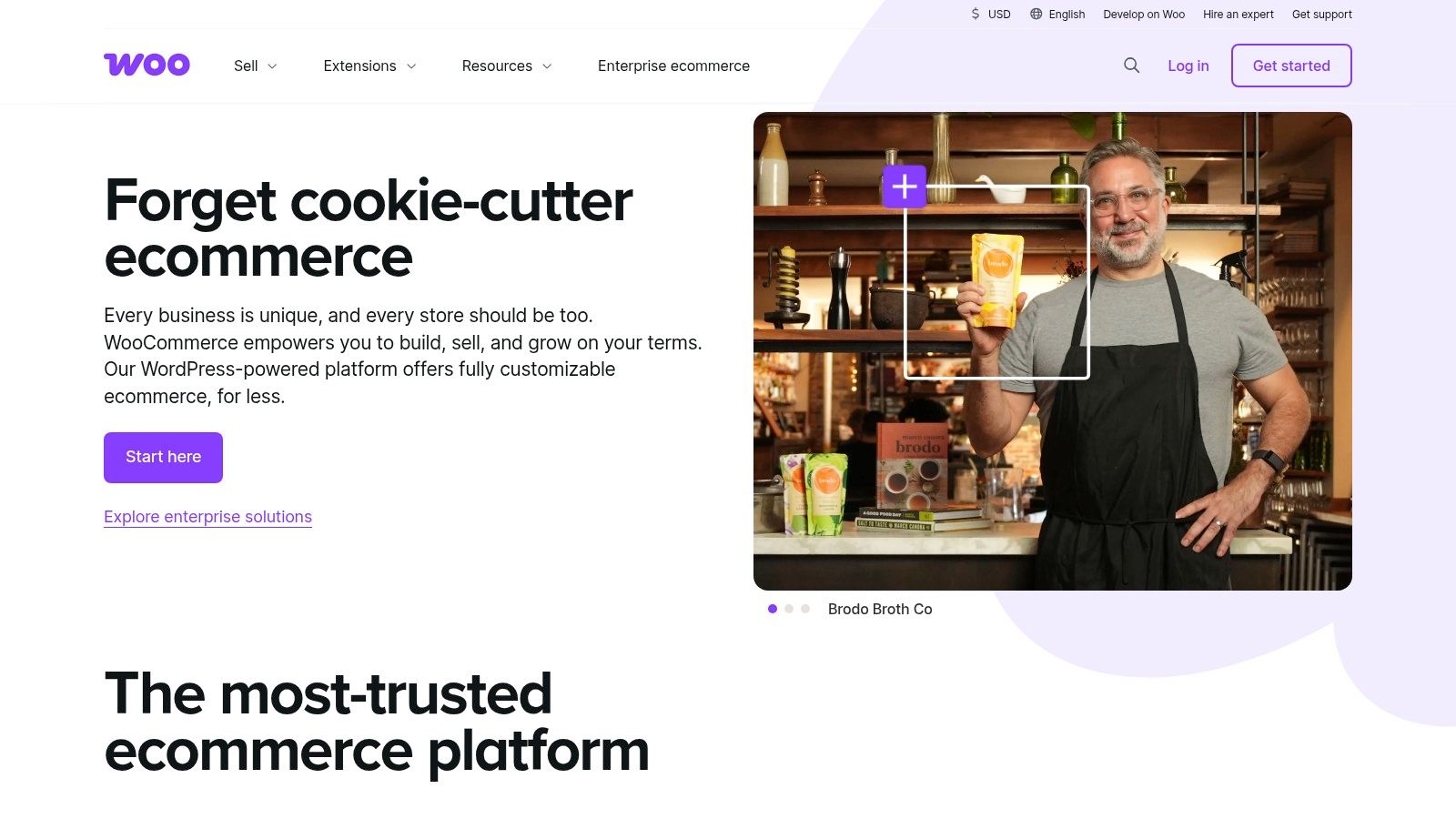
WooCommerce's true power lies in its vast marketplace of extensions, which allows you to add features like software licensing, subscriptions, and automated tax calculations. This modular approach lets you build a store tailored precisely to your needs. If you're considering an owned platform but want to see how it stacks up against hosted solutions, our detailed guide on the 14 best Shopify alternatives offers a comprehensive comparison. The trade-off for this flexibility is that you are responsible for your own hosting, security, and maintenance.
Key Details & Pricing
While the core WooCommerce plugin is free, the total cost depends on your hosting and the premium extensions you choose to integrate.
- Platform Fee: $0 (the plugin is free).
- Additional Costs: You must pay for web hosting (from ~5/mo to 100+/mo), a domain name, and any premium extensions needed for advanced functionality like subscriptions or memberships. Payment gateway fees (e.g., Stripe, PayPal) also apply.
- Best For: WordPress users, entrepreneurs, and businesses who demand full ownership and customization capabilities for their digital storefront.
Pros:
- Complete control and ownership over your store, data, and design.
- The core software is free and open-source.
- Massive library of extensions to add almost any functionality imaginable.
Cons:
- Requires you to manage hosting, security, and updates.
- Costs for hosting and premium extensions can accumulate quickly.
Website: https://woocommerce.com
9. Lemon Squeezy
Lemon Squeezy has emerged as a powerful contender among the best platforms to sell digital products, particularly for software developers, SaaS companies, and creators who need robust licensing and subscription management. It is designed from the ground up to handle the complexities of selling software, including license key generation and validation, tiered subscriptions, and usage-based billing. The platform supports everything from one-time downloads and ebooks to complex software-as-a-service models.
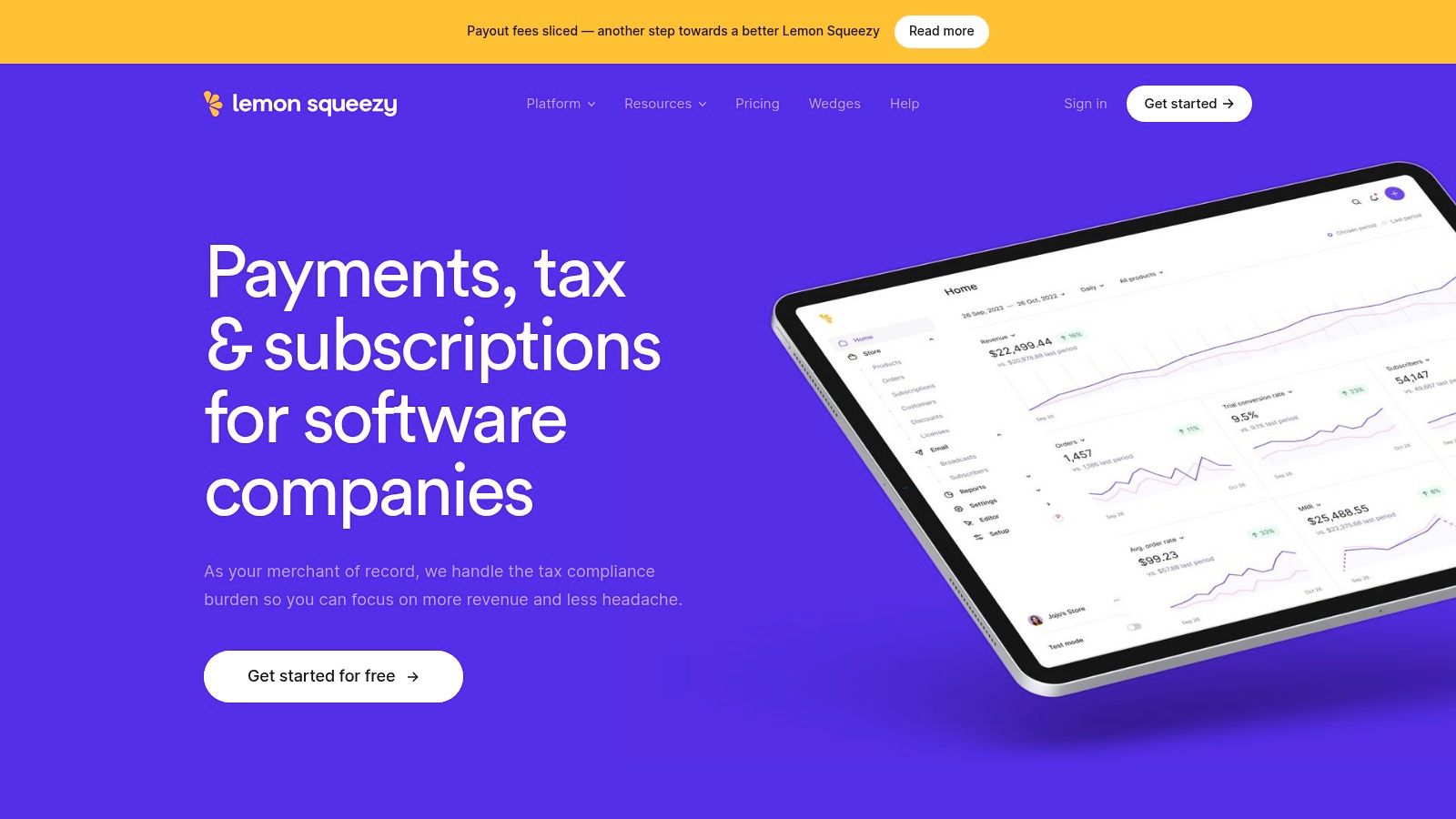
Its most significant advantage is its function as a Merchant of Record (MoR). Lemon Squeezy takes on the full legal responsibility for collecting and remitting global sales taxes and VAT, a critical feature for anyone selling to an international audience. This service dramatically simplifies compliance and offloads a huge administrative burden from sellers. The platform also includes built-in tools for email marketing, abandoned cart recovery, and lead magnets, providing an all-in-one solution for growth.
Key Details & Pricing
Lemon Squeezy uses a straightforward, transaction-based pricing model with no monthly fees for its standard plan.
- Platform Fee: 5% + 50¢ per transaction.
- Payment Processing: Standard Stripe fees apply on top (e.g., 2.9% + 30¢ for US cards).
- Additional Fees: Small extra fees may apply for certain payment methods like PayPal (1%) and for international card transactions (1.5%).
- Best For: SaaS businesses, software developers, and creators needing built-in licensing, subscription management, and complete tax compliance.
Pros:
- Acts as Merchant of Record, handling all global sales tax and VAT.
- Excellent built-in support for software licensing and subscriptions.
- Developer-friendly with a comprehensive API for custom integrations.
Cons:
- Transaction fees can become more expensive than some subscription models for high-volume businesses.
- The combined fee structure can be slightly more complex than a single flat-rate platform.
Website: https://www.lemonsqueezy.com
10. Paddle
Paddle is a comprehensive Merchant of Record (MoR) platform specifically optimized for software and SaaS businesses. It’s designed for companies that need a robust, all-in-one solution for global payments, subscriptions, tax compliance, and fraud prevention. Instead of acting as a simple payment gateway, Paddle becomes the reseller of your products, taking on the full legal and financial liability for every transaction. This makes it one of the best platforms to sell digital products for high-growth software companies that want to offload operational complexity.

The platform's core strength is its ability to handle the entire revenue infrastructure. This includes not just payment processing but also automated dunning for recurring billing, invoicing, global sales tax and VAT remittance, and even buyer billing support. By unifying these functions under a single contract, Paddle allows software developers to focus entirely on their product and growth rather than on financial and compliance management, which can be a significant drain on resources.
Key Details & Pricing
Paddle offers a transaction-based pricing model, with custom plans available for businesses operating at a significant scale.
- Platform Fee: 5% + $0.50 per transaction for its standard pay-as-you-go plan.
- Custom Pricing: Available for businesses with high-volume sales or unique use cases, offering more tailored rates and support.
- Best For: SaaS companies, software developers, and high-growth digital businesses that require a complete, hands-off solution for global sales and compliance.
Pros:
- All-inclusive MoR responsibilities completely remove the burden of tax and compliance.
- Handles customer billing support and fraud management.
- Custom pricing is available for scaling businesses.
Cons:
- May be more complex than needed for simple, one-off digital product sales.
- Some sellers prefer the direct control and flexibility of a Stripe-only stack.
Website: https://www.paddle.com
11. FastSpring
FastSpring is an enterprise-grade platform designed for established software, SaaS, and digital product vendors who require a robust global commerce solution. It operates as a full-service Merchant of Record (MoR), handling the complexities of global payments, subscription management, and tax compliance. This makes it one of the best platforms to sell digital products for businesses scaling internationally, as it offloads the significant burden of VAT and sales tax collection and remittance.
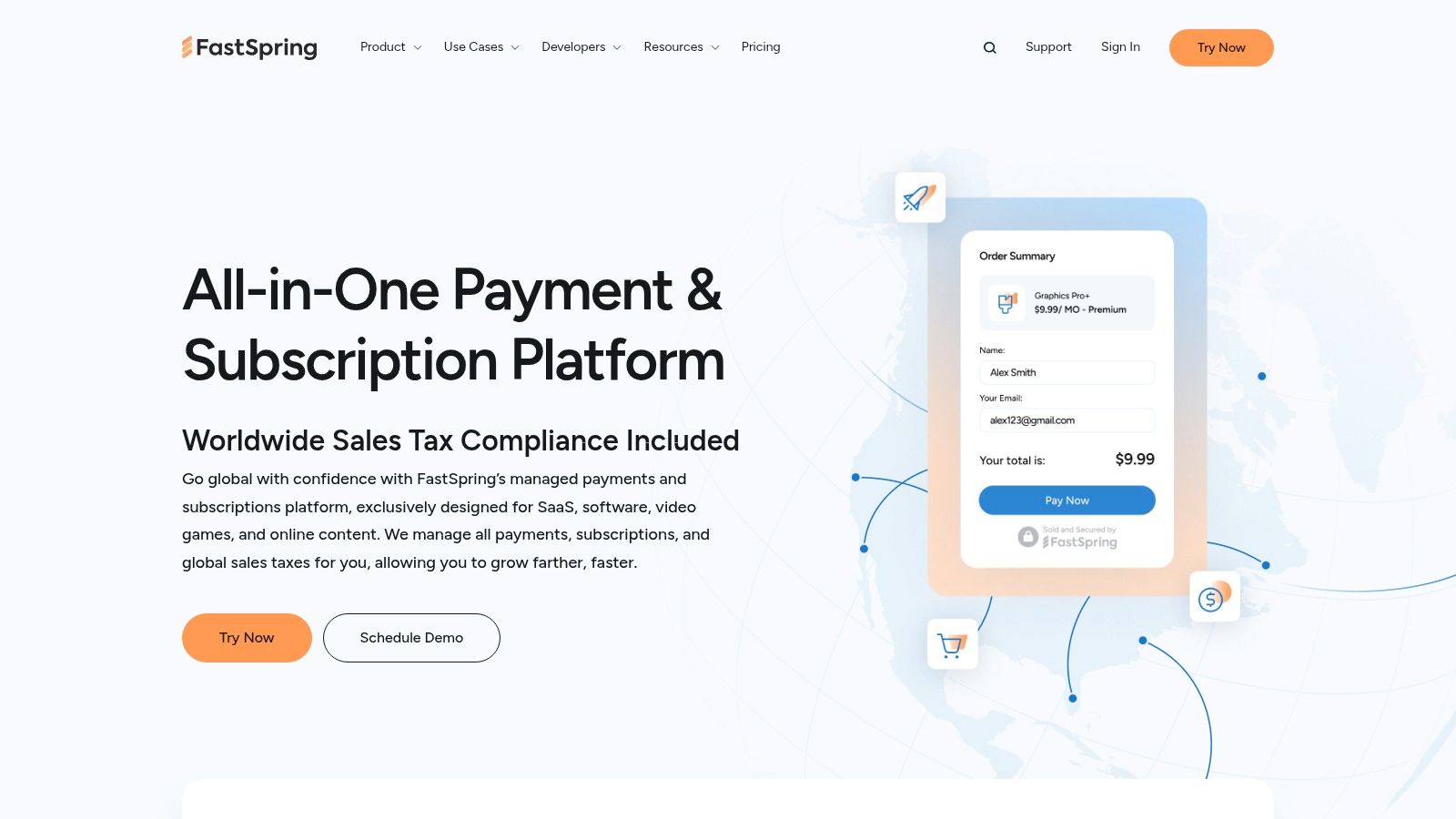
The platform excels at localization, automatically presenting customers with familiar currencies and preferred payment methods, which significantly boosts conversion rates in foreign markets. FastSpring's powerful subscription billing engine supports complex scenarios like metered usage, tiered pricing, and invoicing, catering to the sophisticated needs of B2B software companies. Unlike simpler platforms, it provides a comprehensive suite of tools for managing the entire customer lifecycle, from acquisition to renewal and fraud prevention.
Key Details & Pricing
FastSpring's pricing is not publicly listed and is provided on a quote-based model, reflecting its focus on customized, enterprise-level solutions. The fees are typically a combination of a percentage of revenue and a fixed transaction cost.
- Platform Fee: Quote-based; requires contacting their sales team.
- Key Features: Full Merchant of Record service, advanced subscription billing, global payment processing, automated tax compliance, and fraud management.
- Best For: Established US-based software and SaaS companies selling to a global audience and requiring comprehensive compliance and billing features.
Pros:
- Comprehensive MoR coverage removes global tax and regulatory burdens.
- Highly capable of handling complex software billing and subscription models.
- Dedicated support and enterprise-grade infrastructure.
Cons:
- Pricing is sales-led and less transparent than flat-fee competitors.
- Overkill for individual creators or those selling simple, one-off digital downloads.
Website: https://fastspring.com
12. Etsy (for Digital Downloads)
While known for handmade physical goods, Etsy has carved out a significant niche as one of the best platforms to sell digital products, particularly for creative assets. It offers creators instant access to a massive, built-in audience actively searching for items like digital planners, art prints, social media templates, and sewing patterns. The platform handles the entire fulfillment process, delivering files to buyers instantly after purchase.
A key advantage for sellers is that Etsy acts as a marketplace, not just a storefront. This means your products can be discovered by millions of users through Etsy's search and recommendation algorithms. The platform also manages the complex task of collecting and remitting VAT on digital items for many regions, simplifying international sales. For creators of unique visual assets, such as those looking to sell AI art, Etsy provides a ready-made and trusted environment to reach a global customer base.
Key Details & Pricing
Etsy's fee structure is layered, with several small costs that can accumulate. There is no monthly subscription fee to run a basic shop.
- Listing Fee: $0.20 USD for each item listed or renewed (every 4 months).
- Transaction Fee: 6.5% of the total order amount (including shipping and gift wrap).
- Payment Processing Fee: Varies by country (e.g., 3% + $0.25 in the US).
- Best For: Creative entrepreneurs, artists, and designers specializing in printables, templates, and digital art who want to tap into a large, existing marketplace.
Pros:
- Huge built-in audience actively looking to purchase creative goods.
- Handles instant digital file delivery and VAT collection where required.
- Trusted brand name that gives buyers confidence.
Cons:
- Multiple fees can add up, reducing profit margins.
- Extremely high competition, requiring strong SEO and marketing to stand out.
Website: https://www.etsy.com
Top 12 Platforms to Sell Digital Products — Quick Comparison
| Platform | Core features ✨ | UX & quality ★ | Pricing & value 💰 | Target audience 👥 | Notes / USP |
|---|---|---|---|---|---|
| PromptDen 🏆 | ✨ Multi-model prompts (text/image/video), PromptForge, extensions, native marketplace | ★★★★☆ (active community, trending metrics) | 💰 Variable (per-asset marketplace; creator revenue share) | 👥 Prompt engineers, creators, teams | 🏆 Recommended — unified discovery + monetization + workflow plugins |
| Gumroad | ✨ No-code storefronts, downloads, subscriptions, MoR support | ★★★★☆ (very simple flow) | 💰 No monthly; platform fee + payment fees; Discover fees higher | 👥 Indie creators selling digital goods | Audience discovery (Gumroad Discover) |
| Payhip | ✨ Downloads, courses, memberships, EU/UK VAT handling, instant payouts | ★★★★ (transparent & fast) | 💰 Tiered plans; transaction fee on lower plans; PayPal/Stripe fees | 👥 Creators needing instant payouts & tax handling | Large per-file allowance (up to 5GB) |
| Sellfy | ✨ Digital + POD + physical, marketing tools, large file support | ★★★★ (fast setup) | 💰 Paid plans remove Sellfy fees; Stripe/PayPal fees still apply | 👥 Creators selling downloads + print-on-demand | 0% Sellfy fees on paid plans; basic marketing tools |
| Podia | ✨ Courses, downloads, webinars, email & affiliate tools | ★★★★ (all-in-one simplicity) | 💰 30‑day trial; entry plan has 5% fee | 👥 Course creators & small businesses | Combines site, checkout & email in one stack |
| Kajabi | ✨ Premium courses, funnels, automations, templates | ★★★★★ (polished, scalable) | 💰 Higher-priced premium plans | 👥 Established brands & businesses | Templates + automations for polished experiences |
| Shopify | ✨ Full storefront, apps ecosystem, digital delivery via apps | ★★★★☆ (robust & extensible) | 💰 Monthly + app fees + processing fees | 👥 Merchants needing full commerce stack | Enterprise-grade integrations & POS |
| WooCommerce (WordPress) | ✨ Native downloadable products, huge extension marketplace | ★★★☆☆ (powerful but self-managed) | 💰 Free core; hosting + plugins add cost | 👥 Technical users wanting control & self-hosting | Highly customizable; you own the stack |
| Lemon Squeezy | ✨ MoR, licensing, subscriptions, developer API | ★★★★ (developer-friendly) | 💰 Per-transaction MoR fees; fast setup | 👥 Software & digital creators | Built-in licensing, API & tax compliance |
| Paddle | ✨ MoR for SaaS, billing, dunning, fraud & invoicing | ★★★★ (enterprise billing) | 💰 Custom / scale pricing; MoR fees | 👥 SaaS and high-growth software businesses | All-inclusive MoR + billing support |
| FastSpring | ✨ Global payments, localized methods, invoicing, MoR | ★★★★ (enterprise-grade) | 💰 Quote-based; enterprise fee structure | 👥 Established software vendors | Suited for complex billing & compliance |
| Etsy (Digital) | ✨ Instant digital delivery, built-in marketplace traffic | ★★★★ (strong demand, simple fulfillment) | 💰 Listing + transaction + processing (+ optional ads) | 👥 Creatives selling printables & templates | Large buyer audience but high competition |
Making Your Final Decision: The Right Platform for Your Path
Navigating the landscape of digital product platforms can feel overwhelming. We've journeyed through a dozen of the best platforms to sell digital products, from specialized AI marketplaces like PromptDen to all-in-one course builders like Kajabi and robust ecommerce giants like Shopify. The sheer variety underscores a critical truth: there is no single "best" platform, only the platform that is best for you.
The core takeaway is that your choice should be a direct reflection of your business model, technical expertise, and growth aspirations. Making the right decision now prevents costly and time-consuming migrations later. It's about aligning the tool's strengths with your strategic goals.
Recapping Your Core Choices
Let's distill the options into key strategic categories to simplify your decision-making process:
- For Simplicity and Speed: If your primary goal is to start selling quickly with minimal setup, platforms like Gumroad and Payhip are your champions. They excel at getting your product live in minutes, making them perfect for first-time sellers, validating an idea, or selling one-off products without the overhead of a complex website.
- For the All-in-One Creator Business: When your digital product is part of a larger ecosystem of courses, memberships, and community, you need a unified solution. Podia offers a fantastic balance of features and affordability, while Kajabi provides a premium, high-powered engine for serious info-product entrepreneurs who need advanced marketing automation and analytics.
- For Ultimate Control and Customization: For those who want to build a powerful, brand-centric storefront on their own terms, a self-hosted solution is the answer. WooCommerce for WordPress gives you unparalleled flexibility and access to a vast plugin ecosystem, but it requires more technical management.
- For Software, SaaS, and Global Sales: Selling software or dealing with international customers introduces complex challenges like sales tax, VAT, and regulatory compliance. This is where a Merchant of Record (MoR) is non-negotiable. Lemon Squeezy, Paddle, and FastSpring act as the seller on your behalf, handling all the tax and payment complexities so you can focus entirely on your product.
Key Factors to Guide Your Selection
Before you commit, run your top choices through this final checklist. The ideal platform isn't just about features; it's about fit.
- Product Type: Is it a simple ebook, a complex software package, a series of AI prompts, or a multi-module video course? The nature of your product dictates the features you need, such as content dripping, software licensing, or a dedicated marketplace. For instance, selling prompts on a generic platform like Etsy misses the targeted, expert audience you'd find on a specialized hub like PromptDen.
- Technical Comfort Level: Be honest about your willingness to manage technical details. Do you want a plug-and-play solution where everything just works, or are you comfortable configuring plugins, managing hosting, and troubleshooting issues for greater control?
- Scalability and Long-Term Vision: Where do you see your business in three years? If you plan to expand from a single ebook to a full suite of courses and a community, choosing a platform like Podia or Kajabi from the start will save you headaches. If you're building a software company, starting with an MoR like Paddle is a strategic move.
- Transaction Fees vs. Monthly Costs: Analyze your potential sales volume. Platforms with 0% transaction fees but higher monthly subscriptions (like Sellfy or Kajabi) become more cost-effective as your revenue grows. Conversely, platforms with higher transaction fees but no monthly cost (like Gumroad) are ideal for beginners with uncertain initial sales.
Choosing the right platform is the foundational step in building a successful digital product business. It’s the engine that powers your sales, delivery, and customer relationships. By carefully considering your unique needs and future goals, you can select a partner that not only facilitates transactions but actively contributes to your growth. The perfect platform empowers you to spend less time on administration and more time creating the valuable products your audience loves.
Ready to tap into a dedicated marketplace built for the AI generation? If you're creating and selling AI prompts for models like Midjourney, ChatGPT, or Stable Diffusion, PromptDen is the platform designed specifically for you. Stop trying to fit your niche product into a generic store and start selling to a built-in audience of creators and developers looking for high-quality prompts on PromptDen.